

Shop by Goal
Shop by Category
Shop by Ingredient
Here's 10$ off from your friend
Discount code copied!
* This offer expires in 3 days
Home/Blog/Best Core Workout (for More Than Just the Abs)
Best Core Workout (for More Than Just the Abs)
By Betina Gozo, CPT
January 12, 2026
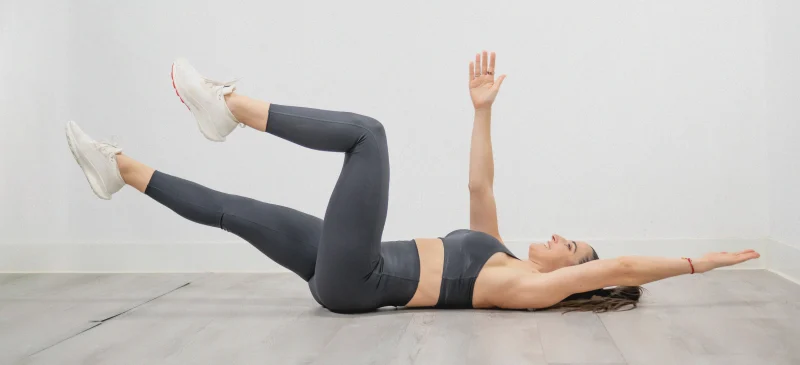
It seems that people talk less about abs these days. It's more about the "core." This is a good thing, as people who are really into fitness have started to understand that “core” training goes way beyond just chasing visible abs — it's about building strength and stability for real life and real movement.
My hope is that more people recognize that your core isn’t just your abs. It includes everything that supports your trunk: your “deep” abdominal muscles, your obliques, your hips and even parts of your back.
When you train your whole core, you move better, lift better, feel stronger and protect your body from injury.
Let’s learn more, including the best type of core workout to incorporate into your exercise routine.
What are the primary “core” muscles?
The core muscles include the abdominal, back, pelvic floor and diaphragm muscles, as well as the muscles of the hips and glutes. These muscles work together to stabilize the spine and pelvis, provide a foundation for movement, and transfer force between the upper and lower body.
Think of the core as three difference sections:
Abdominal muscles: Rectus abdominis (the "six-pack" muscle), external and internal obliques (side muscles), and transverse abdominis (deepest abdominal layer).
Back and side muscles: Erector spinae (muscles running along the spine), multifidus (deep spinal muscles), quadratus lumborum (deep lower back muscle) and lateral trunk muscles.
Other core muscles: Diaphragm (the primary muscle for breathing), pelvic floor muscles, and hip and gluteal muscles.
Why it’s important to target the core, not just the abs
It’s important to target all the major core muscles because each one plays a different role in how you move, stabilize and generate force:
Rectus abdominis = flexion, bracing, and the classic “abs” everyone thinks about.
External and internal obliques = rotation, anti-rotation, side bending and overall trunk stability.
Transverse abdominis (TVA) = deep core support, pelvic stability and protecting the spine.
When you train only one area — like just doing crunches — you miss the muscles that help you stay strong and stable in real life. That’s why I program so much stabilization, anti-rotation, hinging and full-body movements for clients. You naturally recruit all those layers of the core instead of isolating one.
Most people still think “core” means planks or crunches. What’s often missed is the “deep core”, especially the transverse abdominis. One of the simplest and most effective ways to access it is through breath work. Proper breathing helps activate the transverse abdominals and sets the foundation for all movement.
Obliques and anti-rotation work are also commonly neglected. These muscles are essential for stability, posture and transferring strength in everyday life — not just aesthetics.
The good news is that you don’t need 20 different ab exercises. When you choose smart, functional movements, you’re already hitting everything you need.
Benefits of core workouts
When you focus on core stabilization and anti-rotation work — not just crunches — you’re building strength that carries over into literally everything else you do. A strong core helps you lift better, move more efficiently, protect your spine, and feel more stable in day-to-day life. It’s one of those areas where a little consistent work pays off everywhere.
Here are the main benefits of core workouts:
1. Improved posture and alignment
Strong core muscles help support the spine and pelvis, making it easier to sit, stand and move with proper posture. This reduces slouching and compensations that can strain the neck and lower back.
2. Reduced risk of back pain and injury
A well-conditioned core stabilizes the spine during daily activities and exercise. This stability helps protect the lower back and reduces the likelihood of strains or chronic discomfort.
3. Better balance and stability
Your core acts as the body’s center of gravity. Strengthening it improves balance, coordination and control — especially important for aging, athletic performance and fall prevention.
4. Stronger performance in all exercises
Nearly every movement — squats, deadlifts, lunges, push-ups, running — relies on core engagement. A stronger core allows for better force transfer, improved technique and safer lifting.
5. Enhanced athletic power and efficiency
Core strength helps generate and transfer power between the upper and lower body. This improves speed, explosiveness and efficiency in sports and functional movements.
6. Improved breathing and diaphragm support
The core includes the diaphragm, deep abdominal muscles and pelvic floor. Training these muscles can enhance breathing mechanics, core bracing and overall movement efficiency.
7. Better everyday movement and function
From carrying groceries to twisting, bending and reaching, a strong core makes daily tasks easier and safer — reducing fatigue and risk of injury.
8. Supports pelvic floor health
Balanced core training strengthens deep stabilizing muscles that support pelvic organs, which is especially important for women postpartum and adults as they age.
9. Improved body awareness and control
Core workouts enhance proprioception (body awareness), helping you move more deliberately and efficiently during both exercise and daily life.
10. Aesthetic and confidence benefits
While core training isn’t spot fat loss, it does build muscle tone and firmness, contributing to a stronger, more defined midsection and improved confidence.
Core workout routine
When I train clients, we’re doing some kind of core work every session, but that doesn’t mean we’re doing a full “ab workout” every day. The key is variety and intention — mixing stabilization, anti-rotation, flexion and extension, instead of repeating the same movements daily.
We always weave core work into warm-ups or lifts, and it’s rare that we do a full standalone ab-only day. Training the core consistently in small, smart doses throughout the week is ideal. It keeps your core strong without overdoing it.
I focus on core activation routines that prepare the body to move well and lift efficiently. This is a go-to sequence I use for myself and clients before strength training (see a beginner guide to strength training), roughly 3 times per week and you can do on “off” days as well.
Take minimal rest between each core exercise — just enough to maintain good form. This routine works beautifully as a daily practice and is especially effective before strength training to improve overall movement quality.
Core activation flow (1–2 rounds):
1. Dead bug hold (30 seconds on each side)
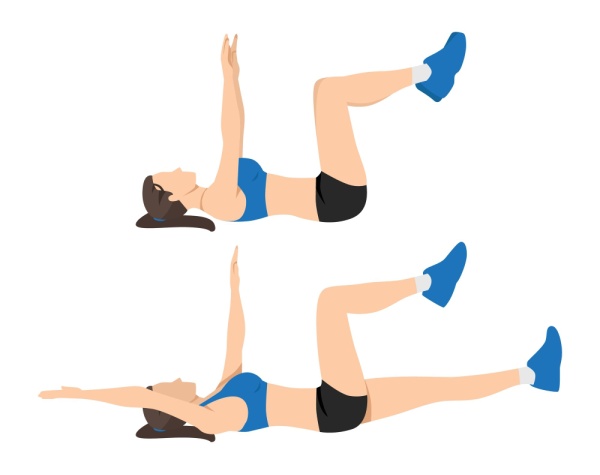
Lie on your back with arms extended toward the ceiling and knees bent at 90 degrees. Brace your core, press your lower back gently into the floor, and slowly lower one arm and the opposite leg while keeping your torso stable. Hold for 30 seconds before alternating sides. Focus on slow nasal breathing and rib-to-pelvis connection.
2. Alternating dead bug – 10 reps per side
Same exercise but instead of holds, do 10 slow reps by alternating sides. Move with control and steady breathing.
3. Bird dog extension hold – 30 seconds per side
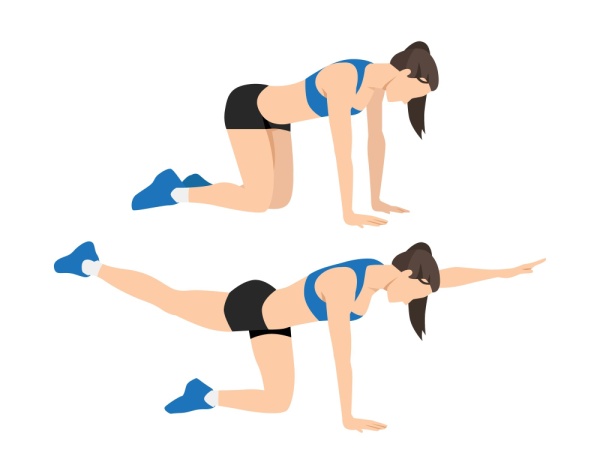
Start on hands and knees with a neutral spine. Brace your core and extend one arm forward and the opposite leg back, keeping hips and shoulders level. Hold for 30 seconds before switching to the other side. Great for alignment, stability and breath.
4. Bird dog (controlled) – 10 reps per side
Same exercise but this time hold briefly, then return to start and alternate sides with controlled movement.
5. Side plank with leg lift – 10 reps per side
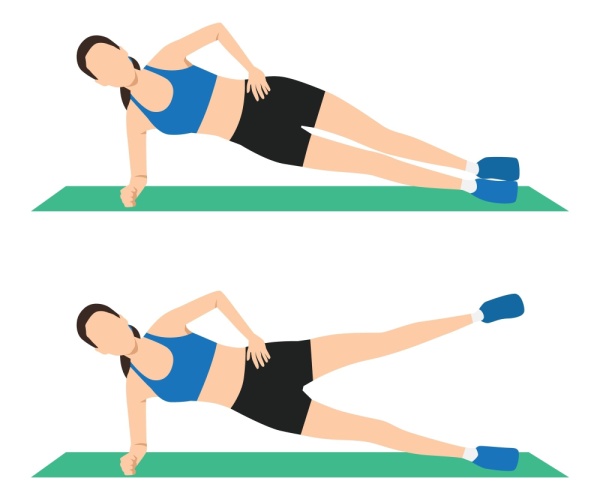
Lie on your side with your elbow under your shoulder and body in a straight line. Brace your core, lift your hips into a side plank, then raise the top leg while keeping hips stacked and stable. Lower the leg with control and repeat before switching sides.
6. Bear crawl – 10 steps forward + 10 steps back
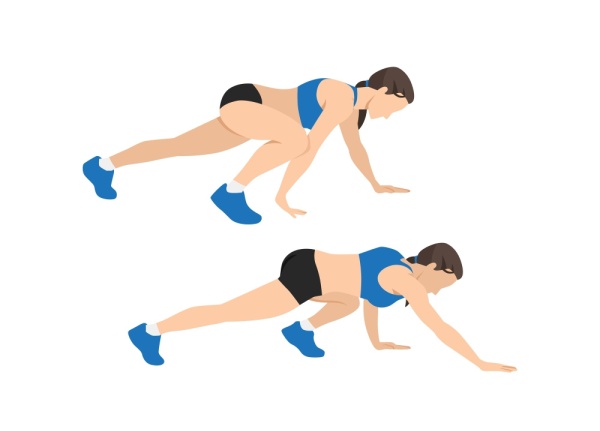
Start on hands and toes with knees hovering just off the floor and spine neutral. Brace your core and crawl forward for 10 controlled steps, moving opposite hand and foot together. Reverse direction and crawl backward for 10 steps, keeping hips low and movement steady.
Crawls are incredibly effective because they integrate the abs with the shoulders, hips and breath — exactly how the core is meant to function in real life.
Frequently asked questions
Do you always follow your weight training with ab/core work? Or before?
Before. Activating the core before strength training helps you get more out of the workout by improving stability, control, and force production.
What are some other favorite core exercises?
Farmer carry, suitcase carry, front rack carry and overhead carry. These train the core through anti-extension, anti-flexion and anti-rotation, depending on the load and position. Many can be done with dumbbells or kettlebells, but even household objects work — so very few truly require a gym.
I also love crawling variations — bear crawls, leopard crawls and slow controlled quadruped movements. Crawling is one of the first ways we build core strength as babies. Before kids ever do a crunch, they learn to stabilize their spine, coordinate opposite limbs and breathe while moving. When adults return to crawling patterns, we’re essentially reconnecting with those foundational movement patterns that support a strong, resilient core.
Should women's and men's ab routines be different in any way?
No. Core muscles function the same. The principles — breathing, stability, progressive overload — apply equally to everyone.
If one does mat Pilates or yoga, do you still think doing an ab workout is needed for most?
Pilates and yoga offer tremendous benefits and absolutely count as core work. For most people, combining those practices with strength training provides the best overall results.
In a sentence or two, how does one get one's abs to look their best?
Diet and progressive strength training. That’s it. (Okay, plus patience.)
Best diet for less fat is going higher in protein and aiming for a daily calorie deficit of about 300–500 calories below your maintenance needs.
Progressive strength training (also called progressive overload) is a training approach where you gradually increase the demands placed on your muscles over time, so they continue to adapt, grow stronger and more resilient.
Do ab workouts burn belly fat?
No. Your body cannot spot-reduce fat. To lose fat around the midsection, you need overall fat loss.
Can you do ab workouts while pregnant?
Yes — especially anti-rotation and stability exercises that avoid crunching or excessive abdominal pressure.
In order to avoid risk of injury, please seek advice directly from your physician, especially if you have existing medical issues, before beginning any exercise or nutritional program. Also, be sure to stretch after exercise to avoid muscle and joint tightness.
Betina Gozo is a CPT (Certified Personal Trainer by the National Strength and Conditioning Association), Certified Functional Strength Coach, Corrective Exercise Specialist and Nike Master Trainer. She's also an Ancient Nutrition Paid Partner and Wellness Roundtable Member. Where can people find more guided workouts? If you’re looking for structured programs and follow-along workouts, check out her app BetinaGozo.tv — it’s available on both iOS and Android. You’ll find 200+ workouts, from quick bodyweight sessions to full gym programs, plus coaching and community support.
Related Articles
October 21, 2025
|health
Great Gams: Best 11 Leg Exercises and 2 Leg Workouts
PreWhether you’re an athlete or just want to feel strong and keep up with your kids or grandkids, lower-body strength is essential. Your legs are your foundation — they support balance, posture and overall movement — so building that strength pays off in every area of life.
January 9, 2026
|health
What Is Zone 2 Cardio? Learn How It Can Burn Fat
Do you want to burn fat? If this is a wellness goal of yours, you may have already heard of Zone 2 cardio.
August 29, 2025
|health
What Is Your Supplement Routine, Betina Gozo?
As you know, and as our guest below says, supplements have that name for a reason: They’re meant to supplement your diet, not replace key foods and liquids. Instead, they can fill in the gaps and make a real difference in how you look and feel.
January 7, 2026
|recipes
Collagen Brownies
Last week, I threw a few scoops of collagen into a batch of brownies, and they didn’t last more than an hour after school. The kids had no idea there was collagen in there. A total mom win.




- © 2010-26 Ancient Brands, LLC. All rights reserved.
- Terms of Use
- Privacy Policy
- CPRA Privacy Policy/Notice of Collection
- Do Not Sell or Share My Personal Information
- Consumer Health Data Privacy Policy