

Shop by Goal
Shop by Category
Shop by Ingredient
Here's 10$ off from your friend
Discount code copied!
* This offer expires in 3 days
Home/Blog/Great Gams: Best 11 Leg Exercises and 2 Leg Workouts
Great Gams: Best 11 Leg Exercises and 2 Leg Workouts
By Betina Gozo, CPT
October 21, 2025
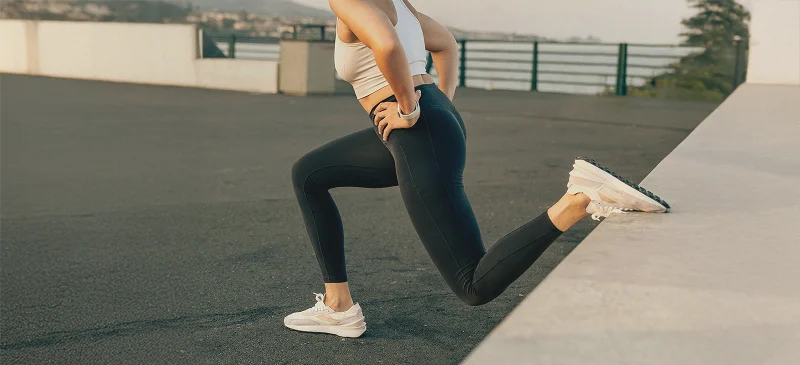
PreWhether you’re an athlete or just want to feel strong and keep up with your kids or grandkids, lower-body strength is essential. Your legs are your foundation — they support balance, posture and overall movement — so building that strength pays off in every area of life.
If you train your legs with weights twice a week, they will get stronger and more toned. Below you’ll find out what the best leg exercises are and then a couple of workouts (beginner and advanced) that incorporate these exercises.
In this article:
Best movement patterns for your leg workout
How to warm up
Common obstacles to a productive leg workout
Best leg exercises
Is it necessary to have a dedicated “leg day”?
How many sets and reps of leg exercises?
Beginning leg workout
Advanced leg workout
Cool down exercises
Pre- and post-workout supplement suggestions
Best movement patterns for your leg workout
When I’m training my clients, I like to focus on four foundational movement patterns: a squat, hinge, lunge and bridge. These are the base for almost every other movement and build strength, balance and functional mobility. They should be mastered before adding heavy loads or more dynamic exercises.
1. Squat pattern
Bending at the hips and knees to lower and raise your body — like sitting into a chair.
Examples: Bodyweight squat, goblet squat, barbell back squat.
Main muscles: Quads, glutes, hamstrings, core.
2. Hinge pattern
Movement driven by the hips, with minimal knee bend — focusing on hip extension and posterior chain strength.
Examples: Romanian deadlift, hip thrust, kettlebell swing.
Main muscles: Glutes, hamstrings, lower back.
3. Lunge pattern
A split-stance or single-leg movement involving one leg stepping or stabilizing independently.
Examples: Forward lunge, reverse lunge, Bulgarian split squat.
Main muscles: Glutes, quads, hamstrings, calves, core.
4. Bridge pattern
Involves extending your hips while keeping your upper body stable — a horizontal push through the glutes and hamstrings. It strengthens the posterior chain and teaches proper hip extension, which is essential for posture, walking and athletic power.
Examples: Hip bridges, glute bridges, hip thrusts, single-leg bridges.
Main muscles: Glutes, quads, hamstrings, lower back.
How to warm up
Before you begin your leg workout, it’s wise to do a proper warm-up to get your muscles and joints ready:
Make sure you’re properly hydrated. Have a water bottle handy.
Do cardio for 5 to 10 minutes, such as a brisk walk, marching in place or using the elliptical machine.
Afterwards, do some walking lunges, good mornings and hip CARs (see below). Do 2 sets of 10 to 15 reps.
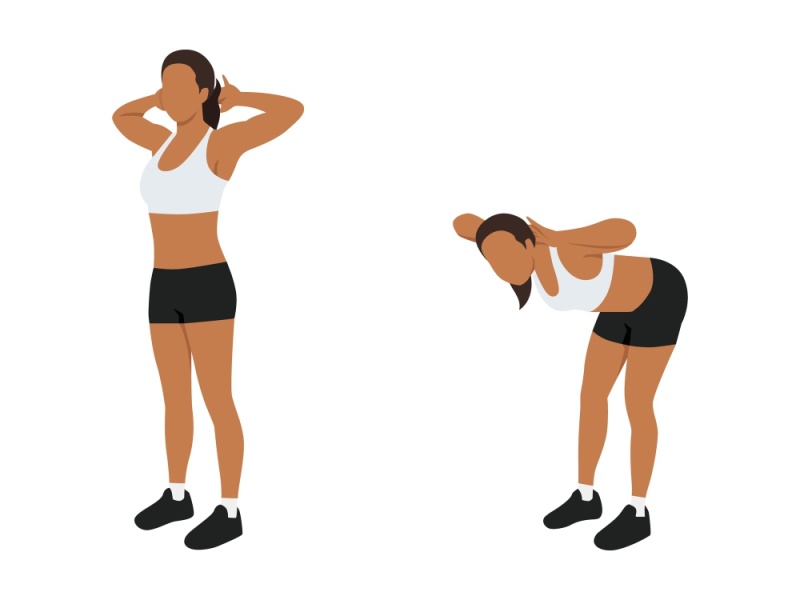
1. Good mornings
Stand with a barbell on your upper back, knees slightly bent. Hinge at the hips to lower your torso until nearly parallel to the floor, keeping your back flat, then squeeze your glutes to return to standing.
Targets: Hamstrings, glutes, and lower back.
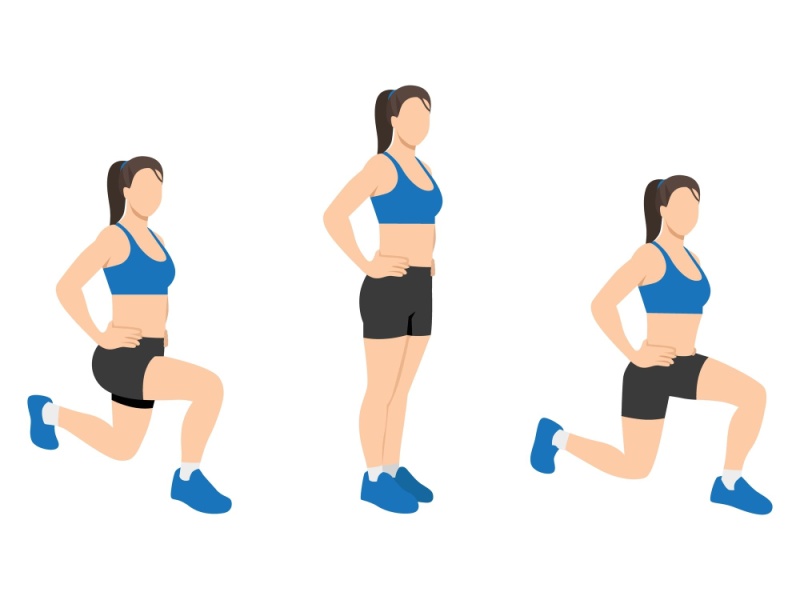
2. Walking lunges
Step forward into a lunge, lowering your back knee toward the floor. Push through your front heel to step forward into the next lunge, alternating legs as you move.
Targets: Quads, glutes, and hamstrings.
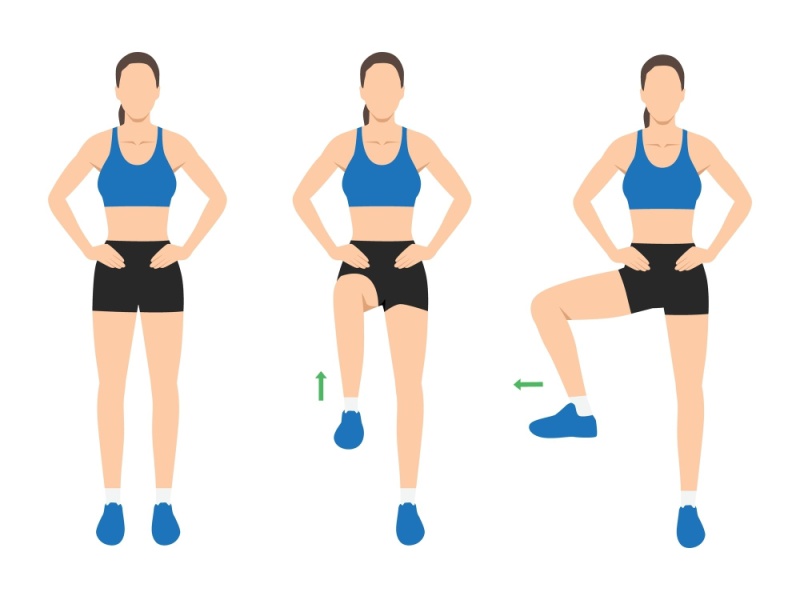
3. Hip CAR (Controlled Articular Rotation)
Stand or kneel and slowly move one hip through its full range of motion — lifting, rotating, and circling the leg without shifting your torso. Focus on control and joint mobility.
Targets: Hip mobility, stability and joint health.
Common obstacles to a productive leg workout
If you’re going to strength train your legs, then commit to the idea of improving your strength and getting the most out of your workout. Here are a few obstacles you want to overcome:
1. Not progressively overloading
That means staying at the same weights or reps for too long. If your workouts feel like a 3–5 out of 10 on the RPE (Rate of Perceived Exertion) scale — with 10 being your max effort — it’s time to increase the challenge.
Over time, adding weight, reps or intensity is what helps you get stronger, leaner and see results.
2. Not training the lower body in multiple directions
It’s so important for people to train their lower body in multiple directions, not just up and down. Life doesn’t happen in one plane of motion — we twist, reach, turn and pivot — so our training should reflect that.
Incorporating movements like lateral lunges, curtsy lunges or even isolated mobility work like Hip CARs (Controlled Articular Rotations) helps strengthen the muscles that stabilize your hips and knees. That not only supports your heavier lift days and helps you build stronger, leaner legs, but it also keeps your joints happy, improves balance and lowers your risk of injury.
Ultimately, moving in different directions helps you feel good for life — not just in your workouts, but in everything you do.
3. Under or overtraining
Ideally, you train your legs with weights about twice a week. Doing them just once is better than not at all, of course, but you will see more progress if you get your leg workout in every 7 to 8 days. This gives enough frequency to build strength, muscle and endurance while allowing recovery between sessions.
On the other hand, training more than that is not advised. The leg muscles consist of large, powerful muscle groups — like the quads, hamstrings, glutes and calves — that experience significant stress and micro-damage during training. They need at least 48 hours of recovery between workouts.
4. Not understanding that there’s no difference between training for leaner legs vs. simply stronger legs
This is one of those common misconceptions. Leaner and stronger often go hand-in-hand. Strength training builds muscle, which increases your metabolism and helps you burn fat more efficiently. Combine that with daily movement — like walking, hiking or dancing — and a balanced, nutrient-dense diet.
Meanwhile, don’t be afraid to lift heavy; it won’t bulk you up — it’ll help you feel toned, confident and powerful.
Best leg exercises
At home, the best exercises are moves like goblet squats, hip bridges, reverse lunges and Romanian deadlifts (RDLs). You can do bodyweight versions or use dumbbells. In the gym, you can employ those same patterns with barbells, cable machines or leg presses.
Here are the top leg exercises:
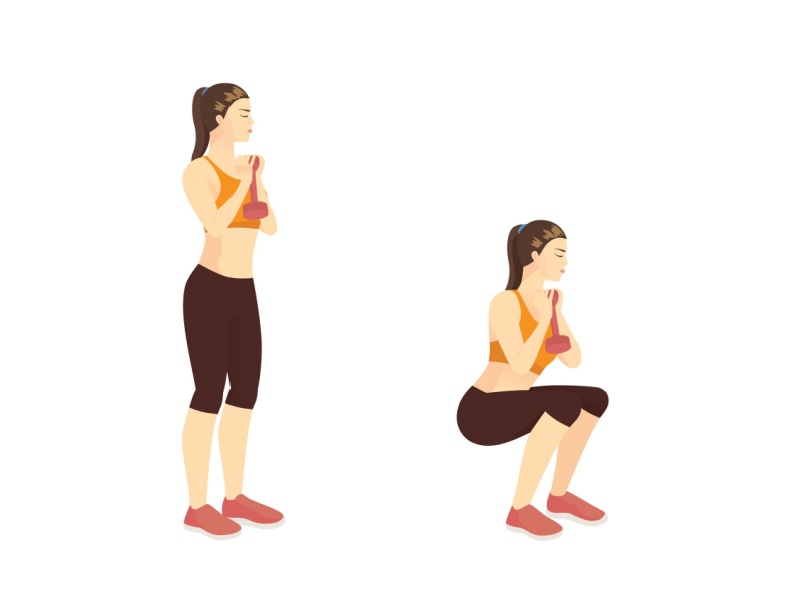
1. Goblet squat
Hold a dumbbell or kettlebell close to your chest, feet shoulder-width apart. Lower into a squat, keeping your chest up and heels down, then press through your heels to stand tall.
Targets: Quads, glutes and core.
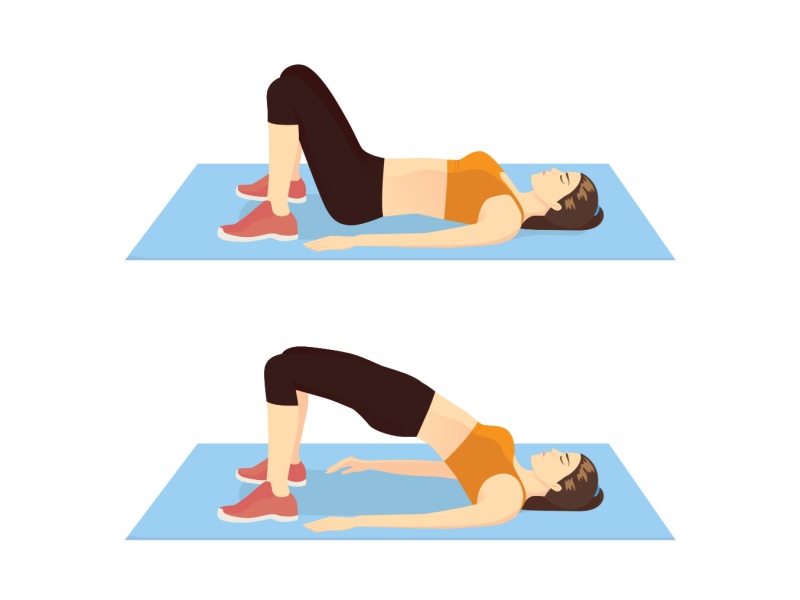
2. Hip bridge
Lie on your back with knees bent and feet flat on the floor, hip-width apart. Press through your heels to lift your hips toward the ceiling, squeezing your glutes at the top. Lower slowly and repeat.
Targets: Glutes, hamstrings and core.
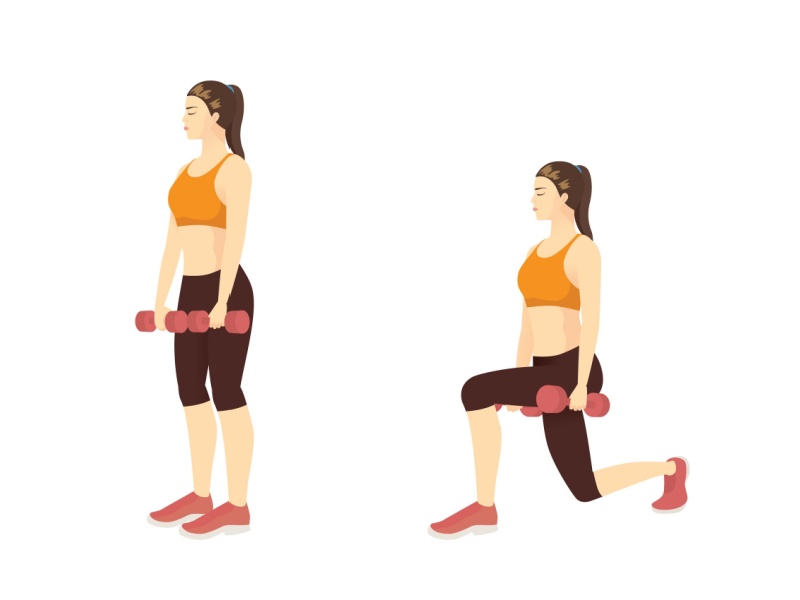
3. Reverse lunge
Hold a dumbbell in each hand at your sides. Step one foot back, lowering until both knees are bent at 90 degrees. Push through your front heel to return to standing and switch legs.
Targets: Glutes, quads and hamstrings.
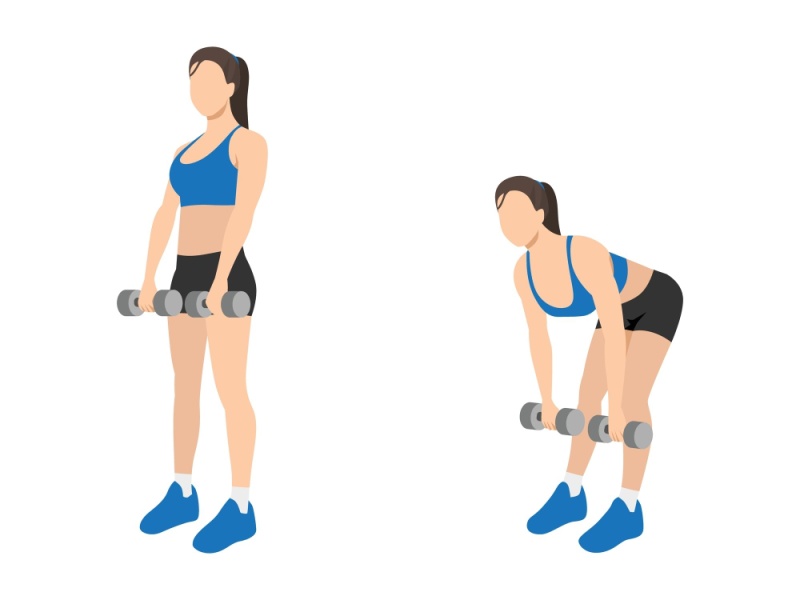
4. Romanian deadlift (RDL)
Hold a dumbbell in each hand, palms facing your thighs. With a slight bend in your knees, hinge at the hips to lower the weights down your legs until you feel a stretch in your hamstrings. Squeeze your glutes to return to standing.
Targets: Hamstrings, glutes and lower back.
5. Bulgarian split squat
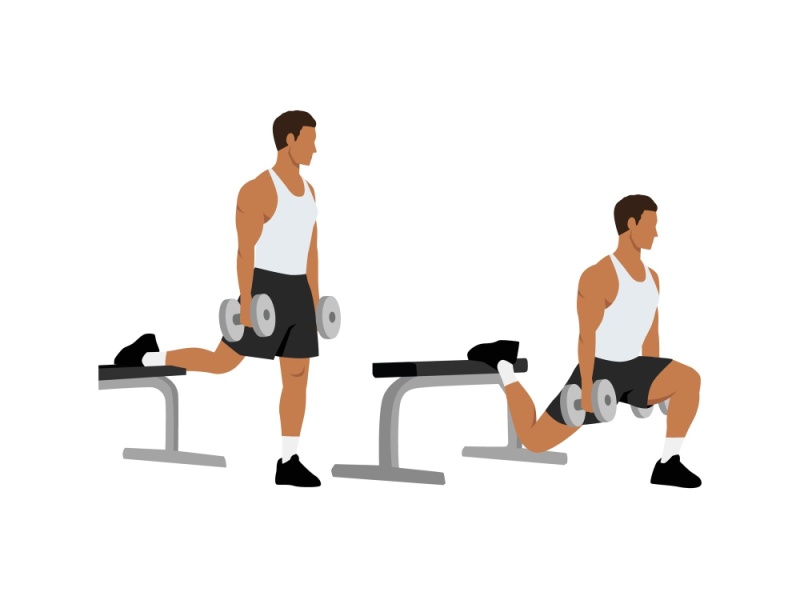
Hold dumbbells at your sides with one foot elevated behind you on a bench. Lower your back knee toward the floor, keeping your front knee over your ankle. Push through your front heel to return to standing.
Targets: Quads, glutes and hamstrings.
6. Calf raise (gym or home)
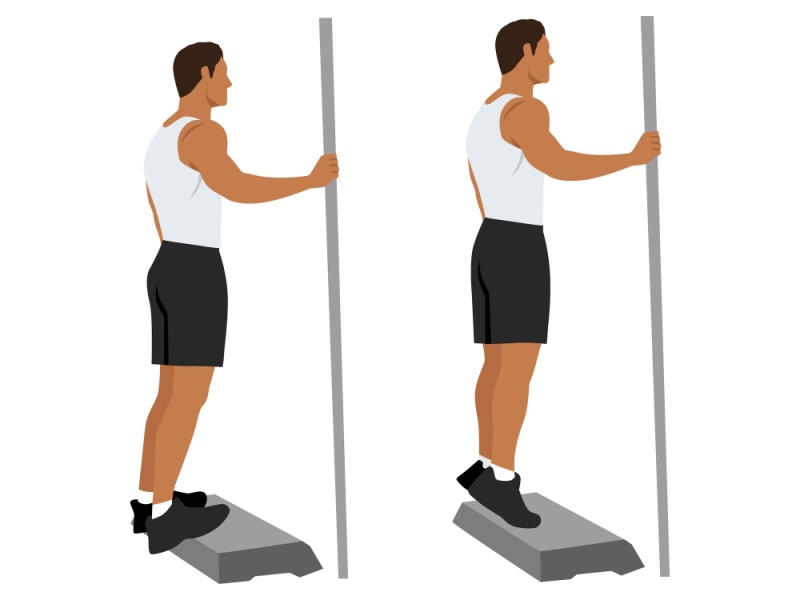
Place the balls of your feet on the platform with heels hanging off. Press through your toes to lift your heels as high as possible, then lower slowly for a full stretch.
At home, find a stair where you can support yourself on one side holding onto a railing. Hold a dumbbell in one hand and balance on the opposite leg. Rise onto the ball of your foot, pause at the top, then lower slowly for a full stretch.
Targets: Calves (gastrocnemius and soleus).
7. Barbell squat (gym)
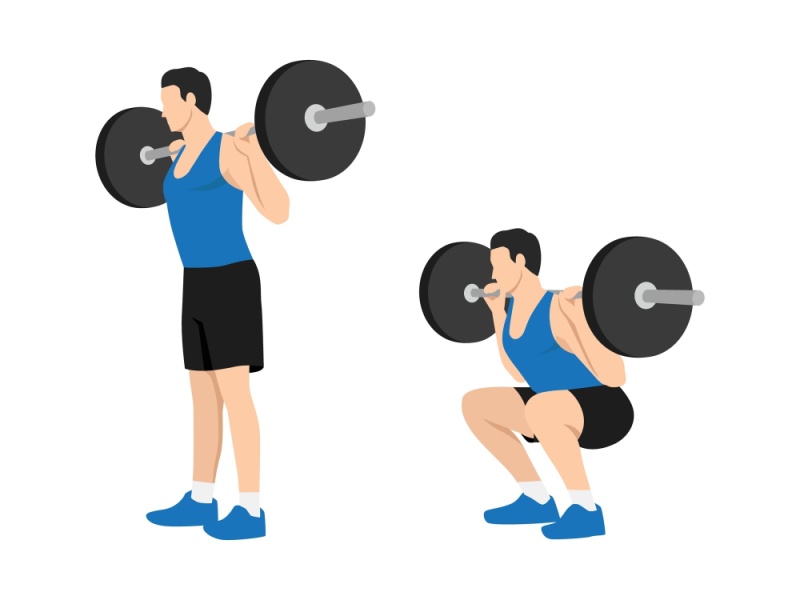
Position a barbell across your upper back, feet shoulder-width apart. Lower your hips down and back until thighs are parallel to the floor, then drive through your heels to stand tall.
Targets: Quads, glutes and core.
8. Leg press machine (gym)
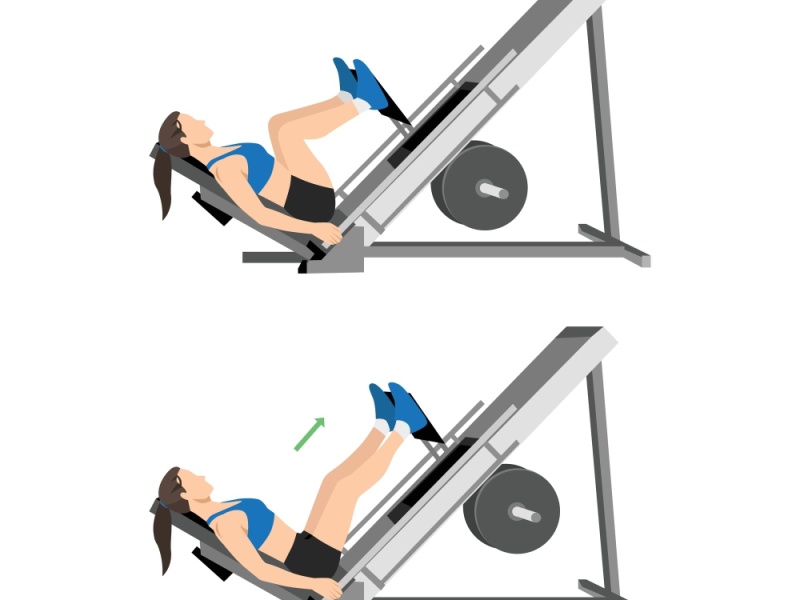
Sit on the machine with feet shoulder-width apart on the platform. Push the weight up by extending your legs, then slowly bend your knees to return to the starting position.
Targets: Quads, glutes and hamstrings.
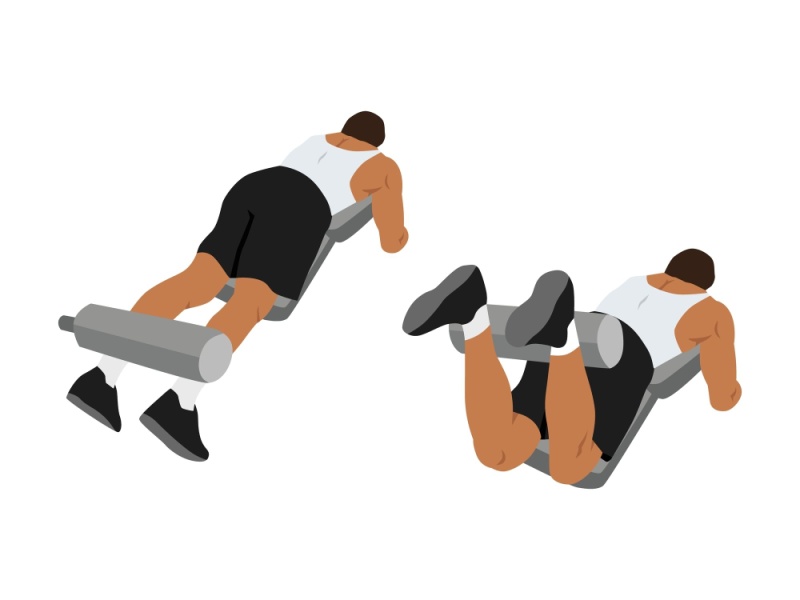
9. Leg curl (gym)
Sit or lie on the machine with the pad just above your ankles. Curl your legs toward your glutes, squeezing your hamstrings, then slowly return to the starting position.
Targets: Hamstrings.
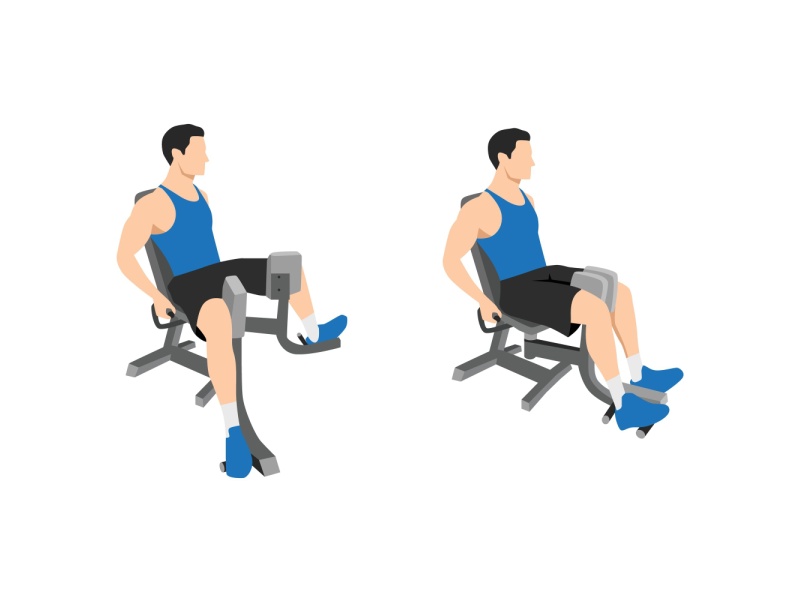
10. Hip adduction machine (gym) or lying hip adduction (home)
Sitting with your legs positioned against the pads with your knees as far apart as possible (you should feel a slight stretch of your inner thigh muscles), you then press your thighs together to move the pads inward.
If you don't have access to a hip adduction machine, do lying hip adduction. Lying on your side, you lift your bottom leg upward against resistance — such as an ankle weight — to strengthen and tone the inner thighs.
Targets: Inner thigh muscles (adductors).
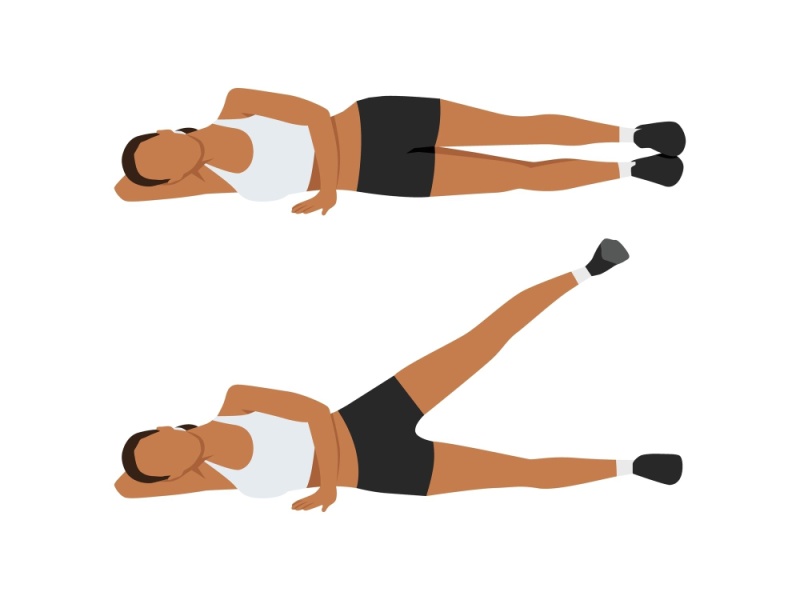
11. Hip abduction machine (gym) or lying side leg lifts (home)
Often using the same machine, sit with your legs inside the pads. Push outward against resistance, with knees moving apart.
If you don't have access to a machine, do lying side leg lifts. While lying on your side, you lift the top leg upward in a controlled motion to engage the glutes and hip abductors.
Targets: Outer thigh (abductors) and glute muscles.
Is it necessary to have a dedicated “leg day”?
Many people don’t initially enjoy training legs because they require more effort, being our most powerful muscle group. That being said, you may benefit from having a dedicated workout to just the legs: leg day! This way you’re able to put all your energies into just your leg exercises in that workout, perhaps with some ab work and cardio afterwards.
On your other training day, you can focus on upper body. Or perhaps you prefer a three-day workout split, such as chest/back (day one), legs (day two) and shoulders/arms (day three), followed by 1–2 days of recovery.
For many people, though, consistency matters more than a perfect split. If you only have time that week for one full-body session, combining upper and lower body is totally fine. Then on another day, you can focus just on lower body. The key is finding a routine that fits your lifestyle and helps you build the habit.
Overall, how often should you train your legs? Training your lower body every 2–3 days is ideal — it allows enough recovery time while maintaining progress. You’ll get stronger without feeling overly sore.
How many sets and reps of leg exercises?
Initially, I always recommend performing your leg exercises slowly and controlled so your body can learn the proper movement patterns. Start with 12–15 reps per exercise for 2–3 rounds. Progress to 6–10 reps (with more weight) per exercise for 3–4 rounds.
Beginning leg workout
If you’re just getting started with lower-body strength training, here’s a great beginner circuit:
Dumbbell goblet squats
Hip bridges
Dumbbell reverse lunges
Dumbbell RDLs
Do 12–15 reps per exercise for 2–3 rounds. Make sure you use good exercise technique (see the descriptions and images above) and perform each rep at a relatively slow pace and under control.
Advanced leg workout
Once you’ve built a solid foundation of leg strength, you can progress by:
Increasing weight
Changing tempo (for example, slower on the way down or pausing at the bottom).
Moving in different directions (like lateral lunges or staggered squats).
Challenging balance with single-leg work (single-leg deadlifts, forward lunges).
Overall, mixing in new leg exercises, as you will see below. A gym will allow more variety of exercises but you can still get in a great leg workout at home.
Also aim for heavier lifts with 6–10 reps per set, depending on your goal.
An advanced leg workout that includes the gym can consist of these 3 supersets (doing two exercises back-to-back) before taking a one-minute break:
Superset 1: Leg presses (or barbell squats) & leg curls
Superset 2: Bulgarian split squats & calf raises
Superset 3: Hip adduction & hip abduction
An advanced leg workout at home can consist of these 3 supersets:
Superset 1: Dumbbell goblet squats & dumbbell RDLs
Superset 2: Dumbbell reverse lunges & calf raises
Superset 3: Lying side leg lifts & lying hip adduction
Cool down exercises
Gentle stretching and mobility work for a few minutes after your leg exercise is always a smart way to go. Benefits include:
Reducing muscle tightness and soreness: Increasing blood flow to your muscles, which helps flush out metabolic waste (like lactic acid) and reduces post-workout stiffness or DOMS (delayed-onset muscle soreness).
Improving flexibility and mobility: Muscles are warm after lifting, making it the ideal time to improve range of motion through static stretches (see below) — helping prevent tightness that can affect your posture or next workout.
Helping long-term recovery and injury prevention: Regular cool-downs keep muscles supple, joints mobile and connective tissue healthy. This can reduce strain and improve performance over time.
Here’s a routine to follow:
1. Light movement (2–5 minutes)
Go for a short walk or get on a cardio machine for a few minutes at a slow pace. Bring your heart rate down.
2. Full cardio (20–45 minutes)
You can also do a full cardio workout after you train your legs, if you feel up to it. It’s a much better idea to do cardio afterwards than before a leg workout. You’ll have more energy and strength for your resistance training, which is where real body composition changes happen. Cardio can come after or on alternate days. Plus, it’s a great cool down!
3. Stretch (5 minutes)
Hold each stretch for 20–30 seconds and breathe deeply through the stretch:
Hamstring stretch: Sit or stand, reach toward your toes to lengthen the back of your legs.
Quad stretch: Standing, pull one foot toward your glutes, keeping knees close.
Hip flexor stretch: Kneel with one knee down, press hips forward gently.
Glute stretch: Lying on your back, cross one ankle over the opposite knee and pull toward chest.
Calf stretch: Step one foot back and press the heel into the floor.
4. Optional recovery
Foam roller: Quads, hamstrings, glutes, calves (30–60 sec each area)
Pre- and Post-workout supplement suggestions
Before: Electrolytes (Ancient Nutrition's Rapid Hydration) to support energy and endurance.
After: Whey protein (or a quality plant-based protein) paired with creatine for muscle recovery and strength gains. (Ancient Nutrition’s collagen or protein blends are great options depending on your goals!)
In order to avoid risk of injury, please seek advice directly from your physician, especially if you have existing medical issues, before beginning any exercise or nutritional program. Also, be sure to stretch after exercise to avoid muscle and joint tightness.
Betina Gozo is a CPT (Certified Personal Trainer by the National Strength and Conditioning Association), Certified Functional Strength Coach, Corrective Exercise Specialist and Nike Master Trainer. She's also an Ancient Nutrition Paid Partner and Wellness Roundtable Member. Where can people find more guided workouts? If you’re looking for structured programs and follow-along workouts, check out her app BetinaGozo.tv — it’s available on both iOS and Android. You’ll find 200+ workouts, from quick bodyweight sessions to full gym programs, plus coaching and community support.
Related Articles
October 16, 2025
|health
Best Time to Take Creatine for Maximum Effectiveness
Creatine (creatine monohydrate) is one of the most studied and trusted supplement ingredients for enhancing fitness and athletic performance. Whether your goal is to build muscle, get lean, recover faster, or increase strength and power, benefit-rich creatine can help. It’s now also recognized for boosting brain health.
October 15, 2025
|health
8 Benefits of Protein and How Much You Need
Everyone is talking about protein these days, as so many have discovered the benefits go beyond helping to build muscle and extend to keeping hunger at bay, curbing cravings, healthy weight management, bone health and more. In addition, protein helps you preserve muscle as you age.
July 15, 2026
|health
15 Daily Habits to Help Support Fat Loss Over Time
What does a “fat loss day” look like? What kind of daily actions, large and small, can you take that will help you lose body fat? That will help you lose weight or manage a healthy weight?
July 5, 2026
|health
18 Original Superfoods: Key Nutrients and How to Use
Superfoods. Great word but what does it connote? Foods that are super? Yes, but how? Technically, there’s no set criteria for what defines a superfood.




- © 2010-26 Ancient Brands, LLC. All rights reserved.
- Terms of Use
- Privacy Policy
- CPRA Privacy Policy/Notice of Collection
- Do Not Sell or Share My Personal Information
- Consumer Health Data Privacy Policy