Shop by Category
Shop Collagen
Get clinically proven results for your hair, skin, nails, joints and gut with collagen. Packed with powerful ingredients and offered in versatile powders, capsules or gummies.

Shop Sports Nutrition
Whether you’re looking for effective and natural hydration†, a clean energy boost†, fat loss support†* or gut-friendly protein, we’ve got the right formula for you. Who says supplements are just for athletes?
Peptides are small but mighty. These bioactive messengers are easily absorbed and work with your body, delivering targeted activity for specific benefits that range from appetite control to metabolism support.
Shop Organic SuperGreens
From clean energy and detox and digestion support to gut health and whole-body balance – our Organic SuperGreens products give you the benefits of juicing without the hassle.
Shop Protein
Discover superfood protein powders with easy-to-digest ingredients, designed to help you support your metabolism, build lean muscle and be greater than your goals.
Shop Gut Health
Put your gut health first. Our powerful probiotics, enzymes and supplements are designed to promote gut health and comfort, healthy digestive function and immune system support.
Shop Vitamins & Minerals
Designed to fill the gaps left by modern diets, our superfood formulas combine ancient techniques like fermentation with clinically proven ingredients for results you can really feel.
Our Story
Ancient Nutrition is driven by our mission to bring history’s most powerful superfoods to the world with a steadfast commitment to restoring our farmlands and healing our planet through regenerative farming.
Here's 10$ off from your friend
Discount code copied!
* This offer expires in 3 days
Home/Blog/How to Make a Protein Shake: 4 Easy Steps
How to Make a Protein Shake: 4 Easy Steps
By Holly Darnell, RD
May 21, 2026
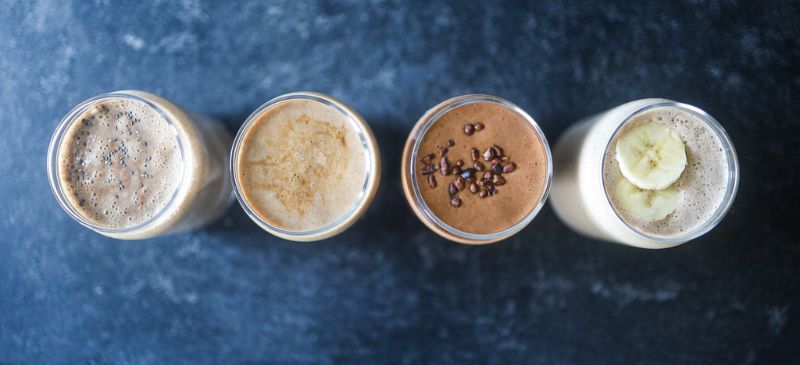
What is a protein shake exactly? Typically it’s simply tossing protein powder into a shaker bottle with water and giving it a good shake. It’s a quick infusion of protein often consumed before or after a workout.
However, it doesn’t exactly hit the taste buds and brain the way we sometimes crave. Below are four delicious protein shake recipes that include a few extra ingredients, including two with superfood-infused, proprietary "fat loss blends." There's also several other protein powders (including popular whey protein) you can considering adding.
First, learn the basics of making a protein shake so it can become habitual. We tackle some common FAQs, too.
How to make a protein shake
You can customize your shake by following this easy, four-step recipe formula. Simply add the liquid, protein powder, frozen fruit and healthy fat into a power blender. Blend for 30 seconds to one minute, then enjoy.
1. Liquid: Add one cup
Water: You can simply add one cup of water but consider adding a frozen banana (even just half) as well as Greek yogurt to prevent the protein shake from being too watery
Dairy: Whole milk or reduced fat milk (consider A2 milk for better digestibility)
Plant-based: Almond milk or reduced fat coconut milk; if you use coconut milk, go half and half with water because of how calorie-dense coconut milk is (even the light variety); I don't recommend oat milk because it's often highly processed
Water with kefir: Going with 4 ounces of water and 4 ounces of kefir (regular dairy or goat milk kefir) can add some helpful probiotics
2. Protein: Choose your protein powder (1–2 scoops)
Ancient Nutrition offers five proteins powers that are high in protein along with other benefits. Here are the options to choose from:
Multi Collagen Advanced Lean: This formula delivers fast, continuous and persistent collagen benefits that can help you get leaner, get stronger and feel incredible.
Whey Protein + Fat Loss: Made with easy-to-digest whey and a clinically studied Fat Loss Blend, Whey Protein delivers 23g of protein to help you burn calories, increase your metabolism and build lean muscle.
Bone Broth Protein: Get the benefits of an ancient superfood in one convenient scoop. This nutritional powerhouse can support your healthy immune system, promote joint health and nourish your gut.
Whey Protein: With 23 grams of protein per scoop, Whey Protein is an easy-to-digest, delicious way to hit your protein goals — so you can stay active, get stronger and recover faster every day.
Multi Protein: This all-in-one formula delivers 26g of complete protein (made from grass-fed whey, bone broth, A2/A2 milk protein, collagen peptides and colostrum) and a Protein Digestion Blend. Some products also include 5g of creatine monohydrate per serving to support your muscles, joint health, post-workout recovery and cognitive health.
Note that two of these supplement options are designed to help you burn calories and boost your metabolism. With their mild cinnamon flavor, two of them also mix well with the four protein shake flavors featured below: vanilla, banana, coffee and chocolate.
3. Carb: Add one cup of frozen fruit (aids texture, too)
Fruits: Frozen bananas, mango, peaches, pineapple and more.
Low-carb fruits: Frozen berries (strawberries, blueberries and raspberries, in order of fewer net carbs to more) as well as melon (watermelon and cantaloupe)
Rolled oats: Add a couple tablespoons or a quarter-cup for slow-release carbs.
4. Healthy fats
Nut butter (1 tablespoon): Almond, peanut or cashew
Seeds (1 tablespoon): Chia seeds or hemp seeds
Dairy (quarter cup): Greek yogurt (also adds protein and helps texture), milk kefir, goat milk
Frequently asked questions
Why is protein important?
Many reasons. It helps you build lean muscle tissue (we require it for muscle synthesis and burning fat), supports healthy weight management, improves satiety, and even bolsters the health of certain organs and glands. In addition, a lot of our organs, cells and tissues require protein for proper functioning.
Are protein shakes and protein smoothies the same thing?
Not typically, as many smoothies are lower in protein and can be high in sugar.
What’s the best time to have a protein shake?
You really can’t go wrong here, as you’ll be taking in critical protein and nutrients that can help your body any time of day. First thing in the morning works well to provide an energy burst alongside a balanced macronutrient meal that can keep you satisfied for hours.
Of course, having a protein shake before a workout also makes sense. Studies indicate that protein can help improve athletic performance and increase muscle synthesis. Meanwhile, carbohydrates are also key for the pre-workout meal, as our muscles rely on the glucose from them to fuel us.
Consuming a protein shake after a workout is also a great idea to help repair and rebuild muscle tissue that has been taxed during your workout.
Do protein shakes help promote a healthy weight?
Absolutely. A protein shake helps promote an overall healthy weight, works as a meal replacement and helps you achieve satiety. This is especially the case with protein shakes made using Multi Collagen Protein Lean powder.
Why is a frozen banana added to most protein shakes?
A protein shake isn’t worth its salt unless the texture is both thick and creamy. The frozen banana delivers that every time. So much better than a watery protein shake. It’s also an ideal food for athletes and those who exercise regularly thanks to the concentration of quick-acting carbohydrates.
I can’t have bananas. What’s a good substitute?
Because bananas contain natural sugars and raise blood sugar, some people want to know if there’s a good substitute for the frozen banana in protein shakes. Coconut milk or even coconut cream add some creaminess along with healthy fats. Just don’t overdo it, as both are calorie-dense.
Ice cubes always work to add volume and a slushiness to your protein shake. Frozen peaches, zucchini or cauliflower rice also can work well.
Protein shake nutrition
With the select ingredients alongside these Ancient Nutrition protein powders, you’ll be surprised how nutrition-rich each protein shake recipe below is. Not just high in protein, each is high in fiber (to help keep you regular) and multiple vitamins and minerals to aid in muscle synthesis and recovery, gut and immune function, and overall health.
Please note that the nutrition facts for each protein shake below are for the recipes with Multi Collagen Advanced Lean powder. If you use Bone Broth Protein, Whey Protein or Multi Protein, you'll have another 6 to 12 grams of protein per serving.
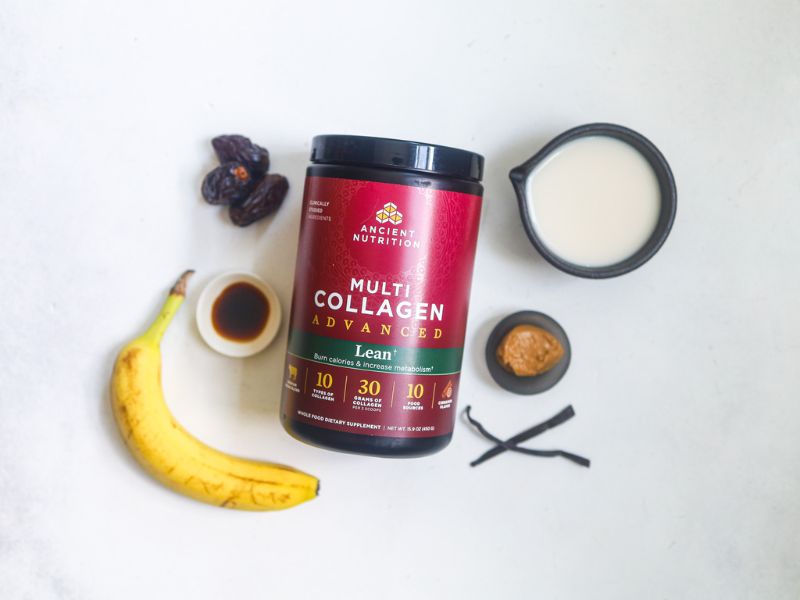
Vanilla protein shake:
Calories — 377
Macros — 50 grams carbohydrates, 12 grams fat, 20 grams protein
Fiber — 7 grams
Vitamins — vitamin C (114% DV*), vitamin B6 (40% DV), vitamin E (37% DV), vitamin B2 (29% DV)
Minerals — selenium (110% DV), zinc (55% DV), manganese (48% DV), copper (46% DV), magnesium (36% DV), phosphorus (22% DV)
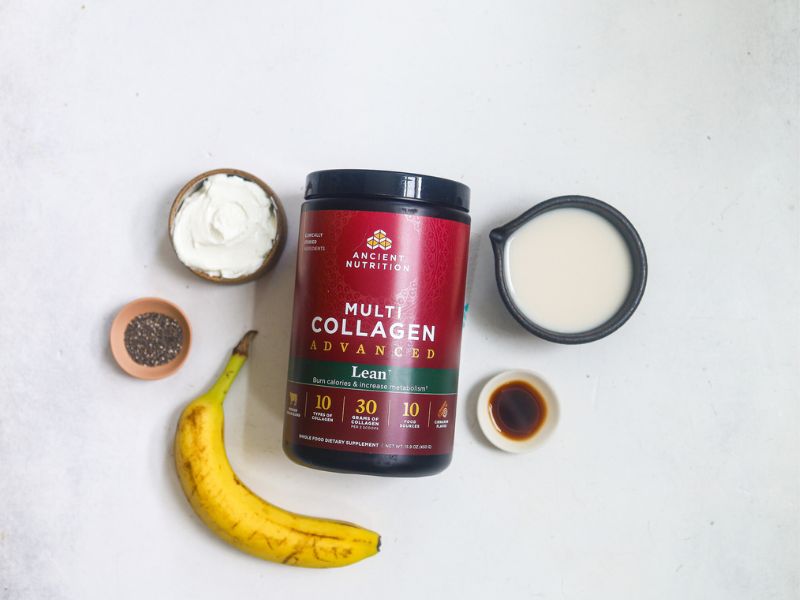
Banana protein shake:
Calories — 270
Macros — 39 grams carbohydrates, 10 grams fat, 25 grams protein
Fiber — 8.7 grams
Vitamins — vitamin C (115% DV), vitamin B6 (36% DV), vitamin B2 (27% DV)
Minerals — selenium (110% DV), zinc (59% DV), manganese (47% DV), magnesium (36% DV), phosphorus (36% DV), copper (35% DV), calcium (23% DV)
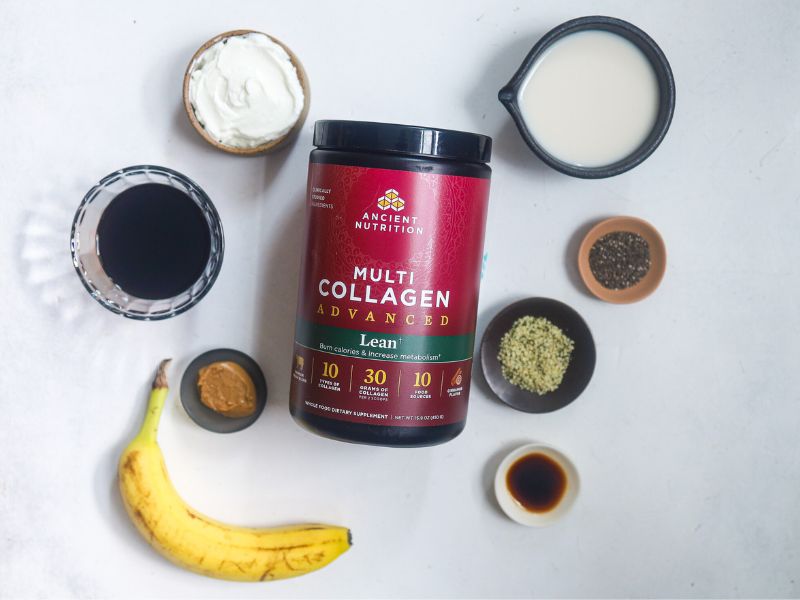
Coffee protein shake:
Calories — 391
Macros — 38 grams carbohydrates, 18 grams fat, 27 grams protein
Fiber — 8.1 grams
Vitamins — vitamin C (114% DV), vitamin B2 (45% DV), vitamin B6 (40% DV), vitamin E (32% DV), vitamin B5 (22% DV)
Minerals — selenium (107% DV), zinc (63% DV), copper (60% DV), manganese (59% DV), magnesium (45% DV), phosphorus (42% DV), calcium (27% DV)
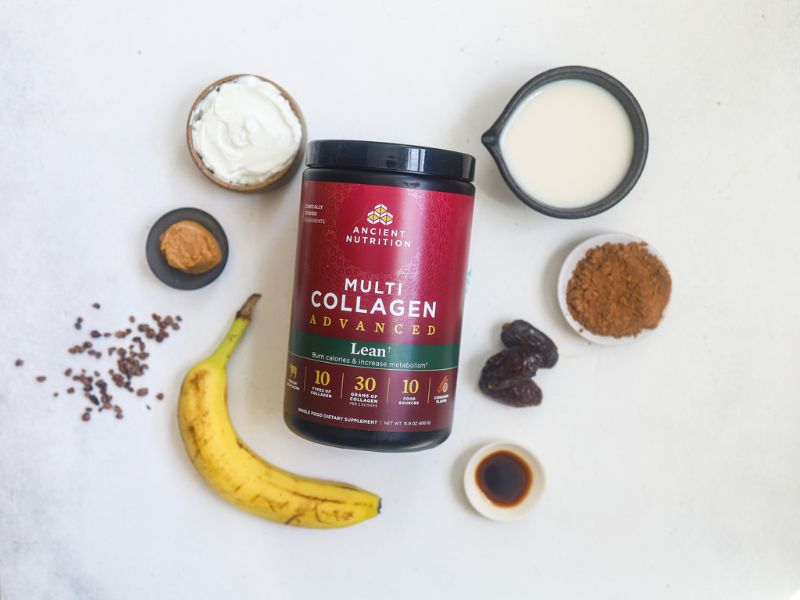
Chocolate protein shake:
Calories — 468
Macros — 57 grams carbohydrates, 18 grams fat, 27 grams protein
Fiber — 7.8 grams
Vitamins — vitamin C (114% DV), vitamin B6 (42% DV), vitamin B2 (40% DV), vitamin E (38% DV), vitamin B5 (20% DV)
Minerals — selenium (98% DV), zinc (61% DV), copper (60% DV), manganese (56% DV), magnesium (44% DV), phosphorus (36% DV), calcium (22% DV), potassium (20% DV)
Note: If you want to knock about 100 calories off the vanilla, coffee and chocolate protein shakes, simply remove the tablespoon of almond butter. Also, bear in the mind that the high levels of both vitamin C and selenium come in large part from the Ancient Nutrition protein supplement powders.
*Daily Value: Percentages are based on a diet of 2,000 calories a day.
How to add more protein
The protein shake recipes below are all high-protein, but if you want to go higher, here are some easy ways:
Protein powder — Add a second scoop (or half a scoop) of any of the protein powders, either matching or mixing flavors. For example, you can mix Multi Collagen Advanced Lean powder (cinnamon) with Whey Protein Milk Chocolate.
Almond butter — It goes well with nearly all smoothies, helps with texture, and adds both protein and healthy fats. As such, it appears in three of the four recipes.
Greek yogurt — The highest protein yogurt by far, its natural creamy texture works well in protein shakes, hence why it appears in three of the four protein shake recipes.
Seeds — Many seeds have surprisingly high protein content, such as pumpkin, hemp, flax and chia seeds. Again, it’s why you’ll see some of these seeds in the recipes below.
Recipe developed by Holly Darnell, RD. Holly is a registered dietitian nutritionist who unlocked self-love at the intersection of exceptional food and practical solutions for healthy living. She’s passionate about helping others make simple, positive lifestyle changes on their individual path to healing.
Protein Shake Recipe: Vanilla, Banana, Coffee, Chocolate
Category
BeveragesServings
1Time
5 minCalories
270-468Author
Holly Darnell, RDTossing your protein powder into a shaker bottle with water does the job, but sometimes you want a protein shake that elevates the experience, delivering fantastic taste and ideal texture alongside the results you seek. Here are four great protein shake recipes: vanilla, banana, coffee and chocolate.
Ingredients
Vanilla Protein Shake
1 cup unsweetened almond milk (or water)
1 teaspoon vanilla extract
1 frozen banana
1 tablespoon almond butter
1 scoop Multi Collagen Advanced Lean powder, Whey Protein + Fat Loss, Bone Broth Protein Vanilla, Whey Protein Vanilla or Multi Protein Vanilla (3 options)
1 vanilla bean pod, scraped (optional)
1 pitted Medjool date (optional)
ice (optional)
Banana Protein Shake
1 cup unsweetened almond milk (or water)
⅓ cup full fat plain Greek yogurt
1 teaspoon vanilla extract
1 frozen banana
1 tablespoon chia seeds
1 scoop Multi Collagen Advanced Lean powder, Whey Protein + Fat Loss, Bone Broth Protein Vanilla, Whey Protein Vanilla or Multi Protein Vanilla (3 options)
ice (optional)
Coffee Protein Shake
½ cup unsweetened almond milk (or water)
½ cup cold or room temperature brewed coffee (or cold brew)
⅓ cup full fat plain Greek yogurt
1 frozen banana
1 scoop Multi Collagen Advanced Lean powder, Whey Protein + Fat Loss, Bone Broth Protein Vanilla, Whey Protein Vanilla or Multi Protein Vanilla (3 options)
1 tablespoon almond butter (optional)
½ tablespoon chia seed (optional)
½ tablespoon hemp seed (optional)
ice (optional)
Chocolate Protein Shake
1 cup unsweetened almond milk (or water)
⅓ cup full fat plain Greek yogurt
1 teaspoon vanilla extract
1 frozen banana
1 tablespoon almond butter
2 tablespoons unsweetened cocoa powder
1 scoop Multi Collagen Advanced Lean powder, Whey Protein + Fat Loss, Bone Broth Protein Chocolate, Whey Protein Chocolate powder or Multi Protein Chocolate (3 choices)
cacao nibs (optional)
1 pitted Medjool date (optional)
ice (optional)
Directions
In a high-speed blender, simply add the ingredients.
If you want to make even colder, add a couple of ice cubes.
If you want to reduce the calories, remove the almond butter or the Medjool date (or both) from those recipes.
Blend until fully combined. Pour into a glass and enjoy.
Nutrition
One serving (405 g) of vanilla protein shake contains:
Calories: 377
Total Carbohydrates: 49.8 g
Fiber: 7.1 g
Sugar: 32.2 g
Total Fat: 12.3 g
Saturated Fat: 1.4 g
Polyunsaturated Fat: 3 g
Monounsaturated Fat: 7.1 g
Trans Fat: 0 g
Protein: 20.3 g
Cholesterol: 0 mg
Sodium: 43 mg (3% DV*)
Vitamin C: 100.3 mg (114% DV)
Selenium: 61 mcg (110% DV)
Zinc: 6 mg (55% DV)
Manganese: 0.871 mg (48% DV)
Copper: 0.41 mg (46% DV)
Vitamin B6: 0.519 mg (40% DV)
Vitamin E: 5.54 mg (37% DV)
Magnesium: 111 mg (36% DV)
Vitamin B2: 0.323 mg (29% DV)
Phosphorus: 151 mg (22% DV)
One serving (460 g) of banana protein shake contains:
Calories: 270
Total Carbohydrates: 38.5 g
Fiber: 8.7 g
Sugar: 19 g
Total Fat: 10.4 g
Saturated Fat: 2.5 g
Polyunsaturated Fat: 4.3 g
Monounsaturated Fat: 2.9 g
Trans Fat: 0.02 g
Protein: 24.7 g
Cholesterol: 11 mg
Sodium: 46 mg (3% DV*)
Vitamin C: 100.9 mg (115% DV)
Selenium: 61 mcg (110% DV)
Zinc: 6.5 mg (59% DV)
Manganese: 0.849 mg (47% DV)
Vitamin B6: 0.468 mg (36% DV)
Magnesium: 111 mg (36% DV)
Phosphorus: 254 mg (36% DV)
Copper: 0.312 mg (35% DV)
Vitamin B2: 0.297 mg (27% DV)
Calcium: 134 mg (23% DV)
One serving (467 g) of coffee protein shake contains:
Calories: 391
Total Carbohydrates: 38.4 g
Fiber: 8.1 g
Sugar: 19.4 g
Total Fat: 17.8 g
Saturated Fat: 3.5 g
Polyunsaturated Fat: 5.4 g
Monounsaturated Fat: 7.9 g
Trans Fat: 0.01 g
Protein: 27.2 g
Cholesterol: 11 mg
Sodium: 81 mg (5% DV*)
Vitamin C: 100.8 mg (114% DV)
Selenium: 58.9 mcg (107% DV)
Zinc: 7 mg (63% DV)
Copper: 0.54 mg (60% DV)
Manganese: 1.059 mg (59% DV)
Magnesium: 140 mg (45% DV)
Vitamin B2: 0.499 mg (45% DV)
Phosphorus: 291 mg (42% DV)
Vitamin B6: 0.516 mg (40% DV)
Vitamin E: 4.87 mg (32% DV)
Calcium: 270 mg (27% DV)
Vitamin B5: 1.077 mg (22% DV)
One serving (493 g) of chocolate protein shake contains:
Calories: 468
Total Carbohydrates: 56.8 g
Fiber: 7.8 g
Sugar: 37.6 g
Total Fat: 18 g
Saturated Fat: 4.8 g
Polyunsaturated Fat: 3.2 g
Monounsaturated Fat: 8.7 g
Trans Fat: 0.003 g
Protein: 26.7 g
Cholesterol: 11 mg
Sodium: 82 mg (5% DV*)
Vitamin C: 100.7 mg (114% DV)
Selenium: 54.1 mcg (98% DV)
Zinc: 6.7 mg (61% DV)
Copper: 0.543 mg (60% DV)
Manganese: 1.013 mg (56% DV)
Magnesium: 137 mg (44% DV)
Vitamin B6: 0.547 mg (42% DV)
Vitamin B2: 0.443 mg (40% DV)
Vitamin E: 5.63 mg (38% DV)
Phosphorus: 250 mg (36% DV)
Calcium: 220 mg (22% DV)
Vitamin B5: 1.012 mg (20% DV)
Potassium: 936 mg (20% DV)
*Daily Value: Percentages are based on a diet of 2,000 calories a day.
Related Articles
August 1, 2025
|recipes
Chocolate Chia Seed Pudding: High in Protein and Fiber
A chia seed pudding is one of those healthy snacks that many of us, truth be told, have yet to make. Perhaps a chocolate version will convince you to give it a try? It’s worth it!
May 21, 2024
|recipes
Eggless Strawberry Ice Cream
Strawberries make a great flavor for so many desserts, such as strawberry shortcake. But for many, strawberry ice cream is where it’s at, for it's one of the most popular summer dessert recipes.
April 4, 2024
10 Edible Flowers: How to Use and Their Health Benefits
Edible flowers? Springtime is when flowers make their way onto the dining table as decoration, but as food? While we’re not talking about a flower sandwich or smoothie, many flowers do work well as flavor enhancers and as a colorful garnish — plus, most importantly, they may also contain some health benefits.
September 8, 2025
|health
What Are Methylated Vitamins? Potential Benefits Plus Multivitamin Options with Them
If you’ve ever scanned the supplement aisle, you may have noticed the term methylated vitamins or even a methylated multivitamin on labels. These aren’t just marketing buzzwords: Methylated forms of nutrients may play an important role in how your body absorbs and uses vitamins, especially B vitamins.




- © 2010-26 Ancient Brands, LLC. All rights reserved.
- Terms of Use
- Privacy Policy
- CPRA Privacy Policy/Notice of Collection
- Do Not Sell or Share My Personal Information
- Consumer Health Data Privacy Policy